Nexio · Test automation software

BAT-EMC: one software for every EMC test

Nexio is a French electromagnetic specialist founded in 2003, and BAT-EMC has been in development since 1995. It runs emission and immunity campaigns from one interface, writes the test report in your own format automatically, is independent of the instrument brands you own, and ships with drivers for more than 500 instruments. ICX Lab is the authorised distributor and provides demonstration, installation, integration and training locally.

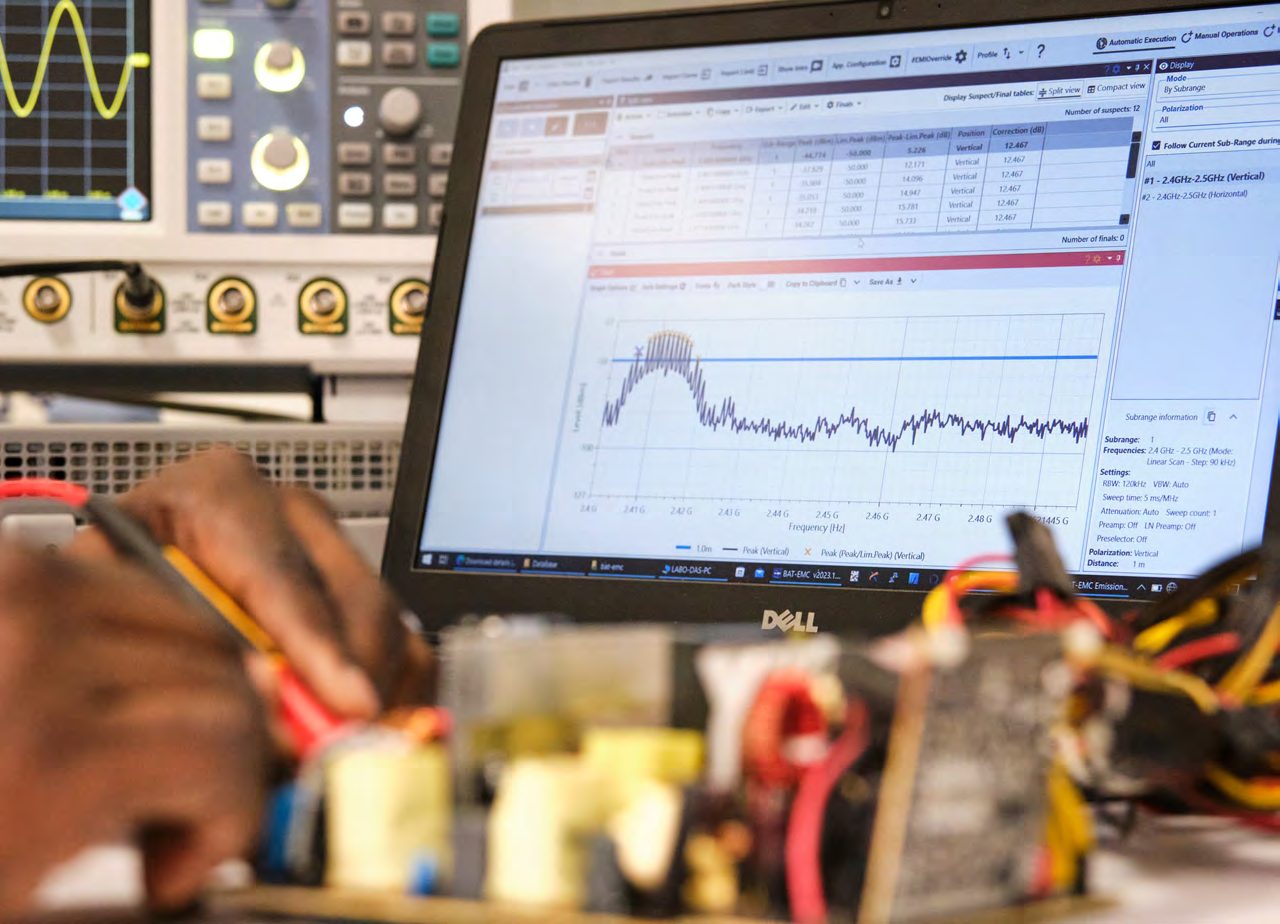
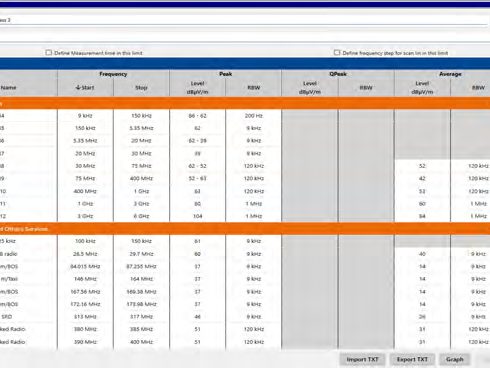
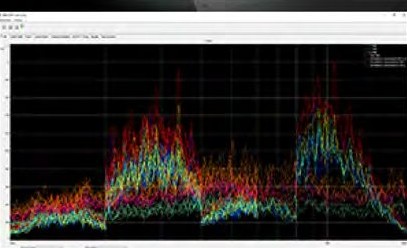
BAT-EMC running an emission measurement on a laboratory bench BAT-EMC on the bench. Photo: Nexio.
Why BAT-EMC

Built for laboratories, not for one manufacturer

Nexio makes software only, so BAT-EMC works with the receivers, generators, amplifiers and positioners you already have and the ones you buy next.

Hardware independentChoose any equipment brand. Drivers for all major manufacturers are included and updated free of charge.
500+ instruments supportedKeysight, Rohde & Schwarz, AR, Schwarzbeck, Narda, Tektronix, Anritsu and more, with new drivers added on request.
One interface for everythingRadiated, conducted and reverberation tests, emission and immunity, in a single Windows tree-view environment, with reports in your laboratory's own format.
Two years of maintenance includedEvery purchase includes two years of updates, driver additions and phone, email and remote support.

Modular design: one core, licences by test type

BAT-EMC Immunity Conducted (BCI, DPI)Radiated, TEM, striplineReverberationTransient, burst, surgeTransmitter testing Emission Conducted voltage, currentRadiated, open siteTEM / GTEMAutomotive by bandRadio spurious Monitoring Easy Control, Easy ScopeEasy Script, Easy ToolVideo (BAT-IMAGE)eCall, CAN busData logger Near-field scanner BAT-SCANNER hardwareBAT-SCAN software3D near-field mapsAmplitude and phaseNFS viewer Automatic report generation Microsoft Word and Excel, standard or custom templates
600+
EMC laboratories using BAT-EMC
25
countries
30 yrs
of BAT-EMC development
Key feature 1 of 4 · Automatic report

Your report format, filled in automatically

Most EMC software writes its report in a fixed format of its own. If your laboratory has its own layout, someone then copies the tables and graphs out of that report, one by one, into the lab's document, for every test. BAT-EMC works the other way round: your existing report becomes the template.

Its report engine can call out every piece of data in BAT-EMC by a tag. You open your own Word report, place a tag wherever a result, table, graph or verdict belongs, and save it as the template. That is done once. From then on, every test produces the finished report in your format, with nothing to copy and nothing to edit.

Your lab nameReport templateEUT{EUT}{Graph: RE vertical}{Table: final peaks}{Verdict}Your template, set up onceBAT-EMCfills every tagwith test dataYour lab nameEMC test reportEUTModel X-200, s/n 0147Verdict: compliesEvery test, no editing
Typical automatic report
  1. Software prints its own fixed format
  2. Engineer copies each graph and table out
  3. Pastes and re-checks them in the lab's layout
  4. Repeats for every test
BAT-EMC with your template
  1. Start from the report your lab already uses
  2. Place a tag where each graph, table and result goes
  3. Save the template, once
  4. Every test after that: finished report, no editing
Worked example

A battery-powered product with Wi-Fi 2.4, 5 and 6 GHz and Bluetooth

Seven operating modes: Wi-Fi transmitting at 2.4 GHz, in the lower and upper 5 GHz bands and at 6 GHz, Bluetooth BR/EDR, Bluetooth LE, and idle. Battery powered, so no mains-port tests.

TestRunsPages
Radio spurious emissions
EN 300 328, EN 301 893, EN 303 687
6 radio modes × 3 channels, 2 polarisations, below and above 1 GHz: 72 plotsabout 110
Radiated emission, EMC
EN 55032 through EN 301 489
7 modes × 2 ranges × 2 polarisations: 28 plotsabout 40
Radiated immunity
IEC 61000-4-3, 80 MHz to 6 GHz
7 modes × 2 polarisations: 14 runsabout 30
ESD
IEC 61000-4-2
7 modes, contact and air discharge pointsabout 15
EUT, modes, set-up photos, equipment about 25
Total100 plots and some 70 result tablesabout 220
Our estimate for illustration. The real count depends on the standards, the channel plan and the laboratory's report style.

How long would it take to put all of that into your laboratory's own report format?

170 graphs and tablesto copy out, place and format by hand, then check, every time; how long that takes depends on who is doing it
Under 10 minutesNexio working example: a report of more than 300 pages generated in a customer's own laboratory format
The generation time varies slightly with the PC's memory, not with BAT-EMC.

Seeing is believing.

Ask for an on-site demo
Key feature 2 of 4 · Flexible driver structure

A driver structure as open as your laboratory

Nexio built BAT-EMC with its own flexible driver structure. Instead of a fixed list of drivers compiled into the software, each driver is an open script that can be added or changed at any time, so the instruments BAT-EMC can use are not limited to what the software shipped with. Most modern instruments can be controlled through VISA over GPIB, USB, LAN or RS-232. When an instrument is reachable through VISA and its SCPI commands are known, a driver can be written as a script, even by the user, without waiting for a software release.

SCPI commands from the instrument manual
*IDN?                 identify the instrument
*RST                  reset to a known state
:FREQ 100 MHz         set the frequency
:MEAS:VOLT?           read a value
SYST:ERR?             check for errors
VISA connection → driver script → BAT-EMC
1Write it yourselfAn instrument reachable through VISA and its SCPI command set: that is all a new driver needs, and you can create it in-house.
2Not familiar with programming?Not a problem. Contact us with the model and its manual and we will write the driver for you, free of charge.
3No VISA or SCPI support?No need to worry. For instruments controlled through the manufacturer's own software library or protocol, a special driver is developed on demand.
Key feature 3 of 4 · EUT monitoring

Know the moment the product misbehaves

Add-on licences watch the equipment under test during immunity campaigns, log every reading and act automatically when a fault appears.

Most test software either leaves EUT monitoring out or supports a short, hard-coded list of monitoring instruments. In BAT-EMC, any instrument the software can talk to can become a monitor, and with its flexible driver structure that list is almost limitless.

Scenario: radiated immunity, performance criterion A

Testing four faces of the EUT typically takes 4 to 8 hours. Under criterion A the product has to keep working within its specification for the whole run.

The traditional wayAn operator sits in front of the monitoring instrument for the whole test and watches for a pass or fail. Whether a short dropout is caught depends on who is watching, and when.
With BAT-EMC monitoringThe operator sets the pass and fail thresholds for each parameter. BAT-EMC logs every reading in step with the immunity test point, plots it on a monitoring graph and flags the frequency where a limit is crossed.
  • Several monitoring instruments at once, plotted together
  • Every reading tied to the immunity test point it was taken at
  • The graph goes straight into the report
  • The limit is the equipment you own, not the software
upper limitlower limitEUT output voltagefail logged at 1.24 GHzupper limitlower limitSupply current80 MHz1 GHz6 GHzReadings logged at every test step, in step with the immunity test
Illustrative monitoring graph: two parameters logged across the band, with one excursion outside its limits recorded as a fail.
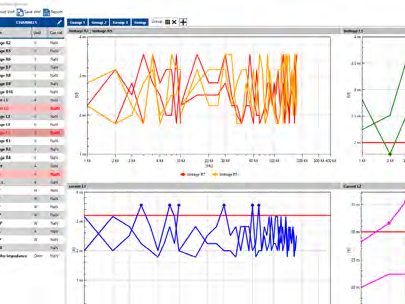
Easy Control monitoring graphs

EASY-MONITORING

A family of BAT-EMC add-ons for real-time signal analysis and user-configured actions on fault detection.

  • Easy Control: voltmeters, multimeters, spectrum analysers, power meters, field probes
  • Easy Scope: oscilloscope measurements with max, min, RMS, frequency, duty cycle and mask analysis
  • Easy Script: commands to the EUT over Ethernet, GPIB, serial, EXE or DLL, including automatic reset after a fault
  • Easy Tool: custom monitoring developed in LabVIEW, Python, C++ or C#

Bring bus and analogue signals out of the chamber over fibre with CHANGEN optic transceivers.

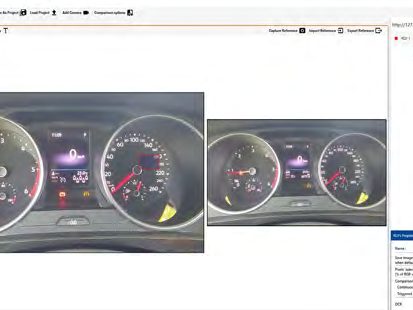
BAT-IMAGE comparing a reference dashboard image with the live image

BAT-IMAGE

Video acquisition and comparison: a reference image against the live image to catch warning lights, display anomalies and analogue needle positions during immunity tests, with fault images recorded and passed to the test report.

  • RCA or HDMI video input
  • Interfaces to MK Messtechnik camera systems
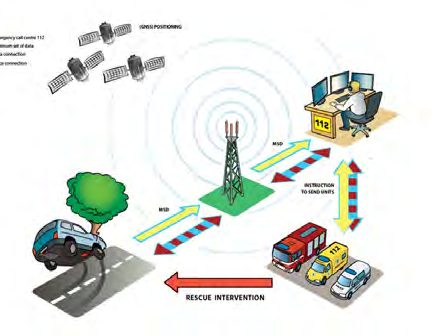
eCall test environment with GNSS simulation and PSAP

eCall and CAN bus

Vehicle communication tools for automotive immunity: the eCall system simulates GNSS positioning and PSAP communication and decodes the MSD, while the CAN bus tool reads and writes bus signals through Vector CANoe/CANalyzer or PEAK PCAN.

Key feature 4 of 4 · Automotive Emission by Band

One test plan for every OEM standard you run

CISPR 25 measures emissions band by band, and most vehicle makers' standards build on it with their own bands, detectors, bandwidths and limits. Many of those bands overlap, often with the same measurement settings but a different limit. The Automotive Emission by Band module was designed around that band approach: a wizard takes in several OEM standards at once and BAT-EMC works out the minimum set of measurements that covers all of them.

The traditional wayThe operator configures every band of every OEM standard by hand, works out where they overlap, and ends up measuring the same range more than once with the same settings.
With Automotive Emission by BandSelect the standards, and BAT-EMC loads their bands, merges the ones that share settings and generates the minimum scan list. Each range is measured once and judged against every limit that applies to it.
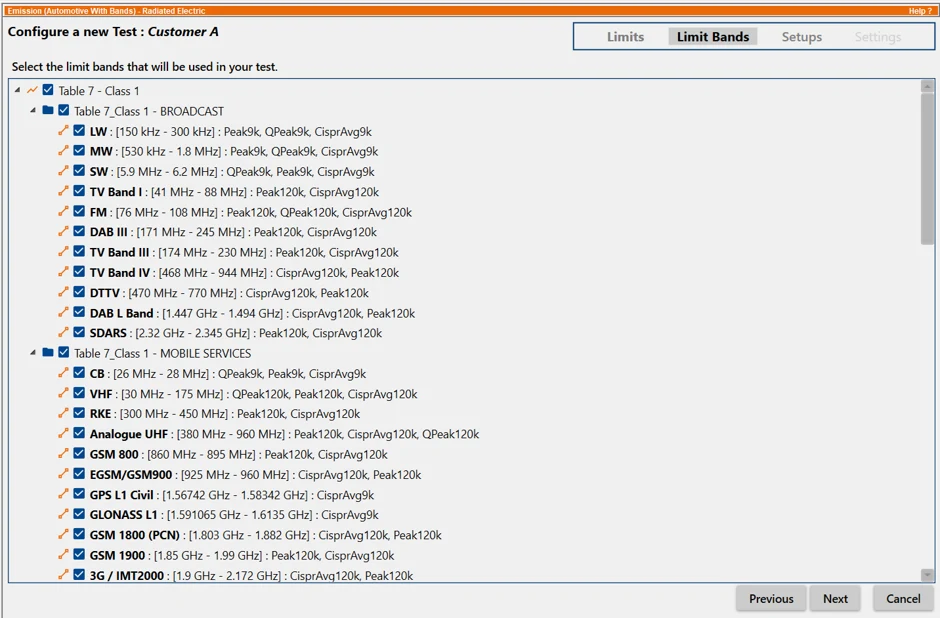
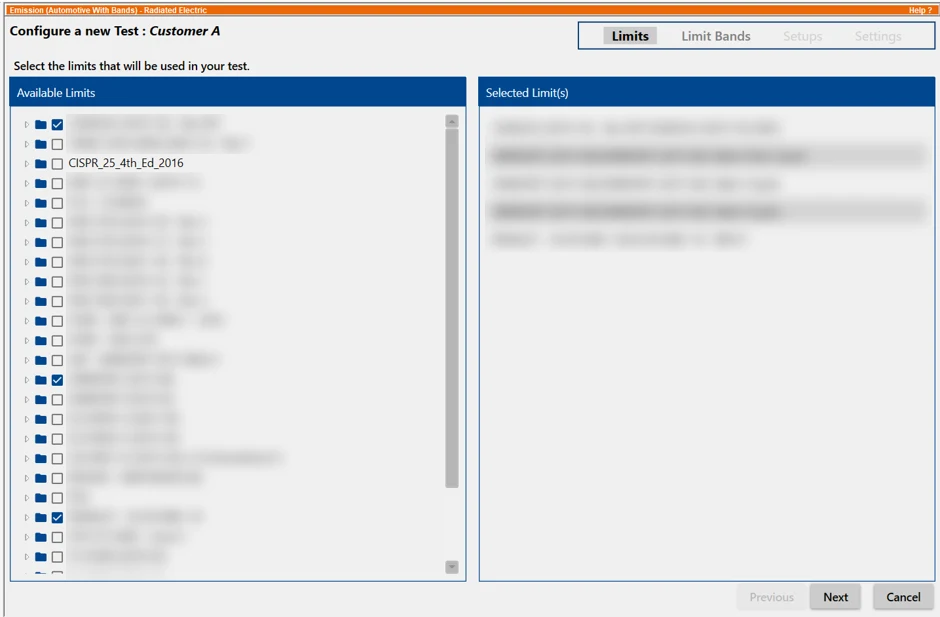
Automotive Emission by Band wizard: selecting CISPR 25 and several OEM standards from the limit library
1Pick the standardsCISPR 25 classes and OEM standards side by side in one library, several at a time.
Automotive Emission by Band wizard: limit bands with their frequency ranges and detectors
2The bands come with themEvery band arrives with its frequency range, detectors and bandwidth, ready to review.
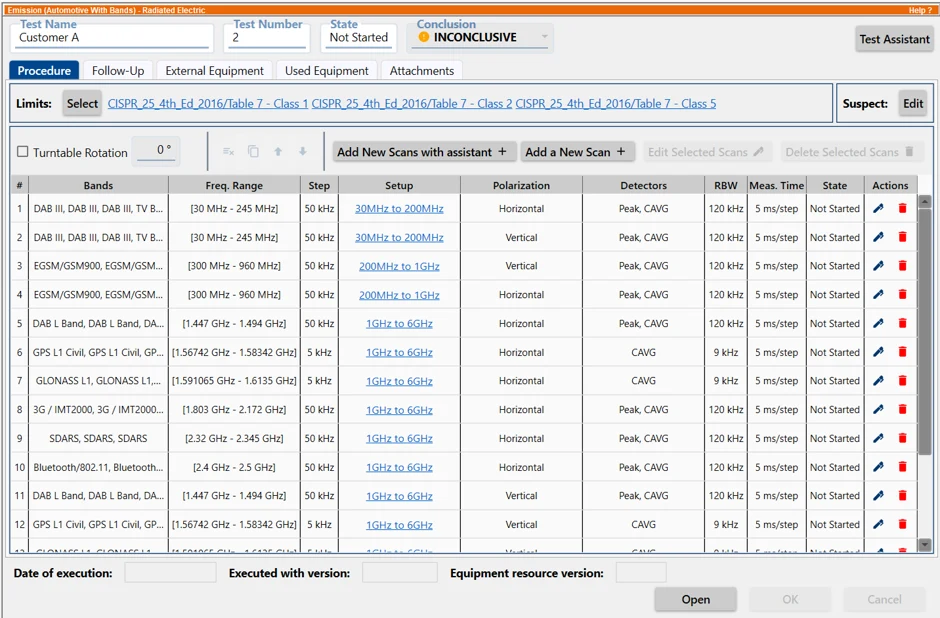
BAT-EMC procedure with the generated list of scans per setup and polarisation
3BAT-EMC works out the minimum scansBands that share settings are merged, so the procedure holds only the scans that are really needed.
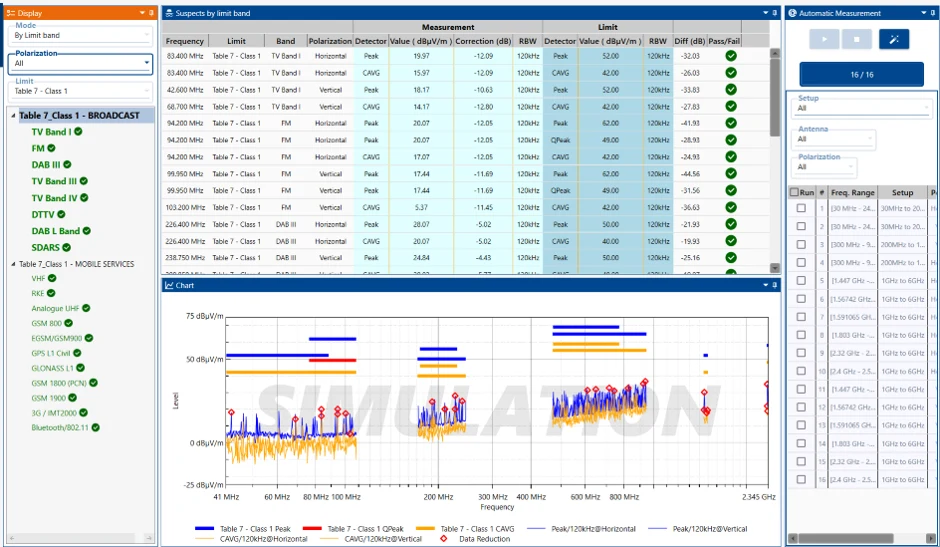
Results by limit band with pass or fail against each limit
4Run once, judged against every limitResults come back band by band, with pass or fail against each standard selected.
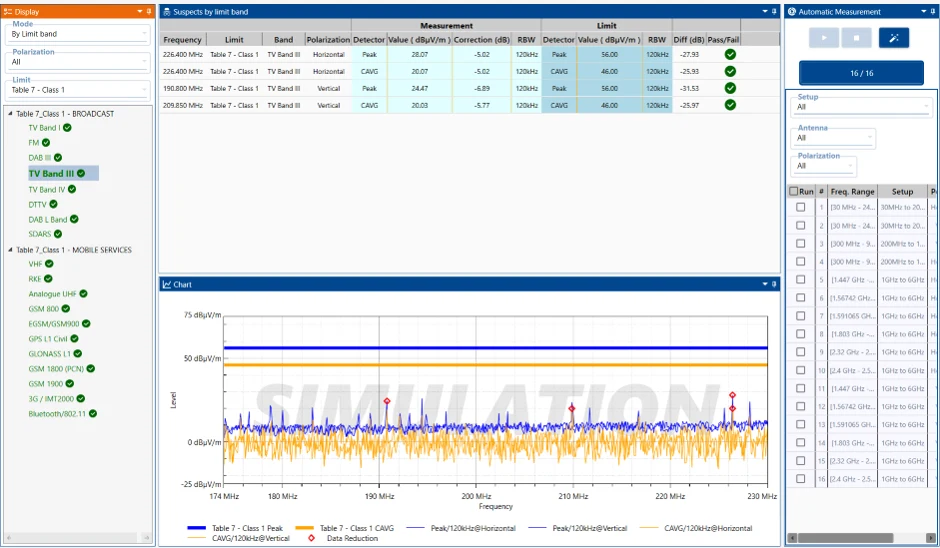
View by band: one limit band selected, showing only its frequency range, limits and suspects
5View by bandClick a band in the list and the chart and the suspect table narrow to that band alone: its frequency range, its limits and its suspects, each with its own pass or fail. Reviewing a long automotive test becomes a walk down the band list.

Screenshots from BAT-EMC in simulation mode. Courtesy of Nexio.

Test software

The BAT-EMC range

Licences are modular. Start with the test types you run today and add others as your scope grows.

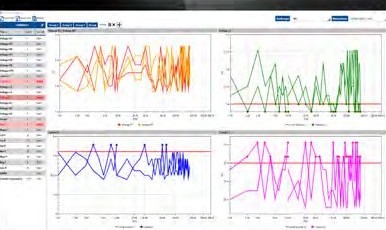
BAT-EMC immunity monitoring graphs

BAT-EMC

The core emission and immunity package. Radiated, conducted and reverberation tests with configurable pre-scan and final scan, antenna mast and turntable control, GTEM calculation to IEC 61000-4-20 and Microsoft Office reporting.

  • Radiated and conducted immunity: electric and magnetic field, BCI, DPI, stripline, TEM
  • Radiated and conducted emission: voltage, current, spurious, TEM/GTEM
  • Customisable test sequences and motion control
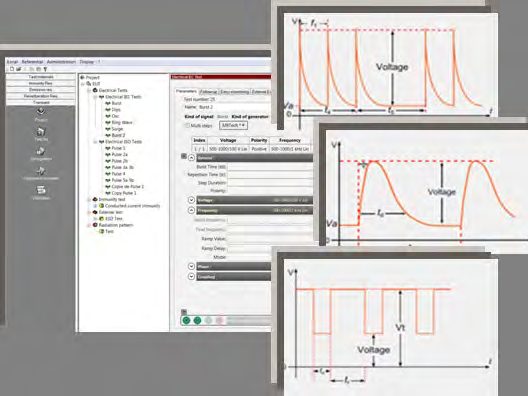
BAT-ELEC transient waveform verification

BAT-ELEC

Electrical EMC testing and control: transient, burst and surge sequences on any brand of generator, with scope-based signal verification and automatic screenshots into the report.

  • IEC 61000-4-4, -4-5, -4-11, -4-12
  • ISO 7637-2 and ISO 16750 automotive transients
  • Drivers for EM TEST, Teseq, Haefely, EMC Partner, Schlöder and more
BAT-RADIO spurious emission spectrum

BAT-RADIO

Radiated spurious emission measurement for radio equipment: chamber calibration, prescan, spurious identification, final measurement and substitution method inside the BAT-EMC environment.

  • ETSI EN 300 328, EN 300 220, EN 301 893, EN 303 687, EN 302 502
  • FCC §15.247 and §15.407
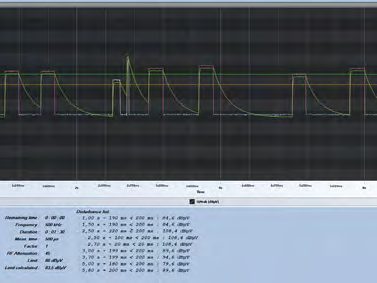
BAT-CLICK click event display

BAT-CLICK

Click rate analysis to CISPR 16-1 and CISPR 14-1 / EN 55014-1 with real-time Max Peak and Quasi-Peak display, event marking and archived reports.

  • Rohde & Schwarz ESW and ESU receivers over LAN or IEC bus
  • 50 µs time resolution, standard exceptions handled
Automotive Emission by Band OEM limit table

Automotive Emission by Band and HV-LV Hybrid

Emission by band to CISPR 25, developed with automotive OEMs: limit definition per OEM, test definition wizard, RBW 120 kHz prescan overview and automatic remeasurement. The Hybrid licence adds CISPR 25 high-voltage measurements on electric and hybrid vehicles. How the wizard works ↑

  • Ford, BMW, Mercedes, GM, Stellantis, Renault, Nissan, Toyota and others
  • HV conducted emission, HV-LV coupling
Reverberation chamber measurement in BAT-EMC

Reverberation

Automated reverberation chamber testing for immunity and emission with empty, loaded and EUT calibration modes and the statistical processing handled by the software.

  • DO-160, MIL-STD, ISO 11451-5, ISO 11452-11, EN 61000-4-21
Lab management and measuring systems

Beyond the test bench

ProjectdatabaseEmissionworkstationImmunityworkstationESDworkstationHarmonicsworkstationProbe testingworkstationOther testsworkstationTest planReport

Project management on your network

A shared project database on network drives gives every workstation the same test data, synchronised and traceable, with no manual file exchange.

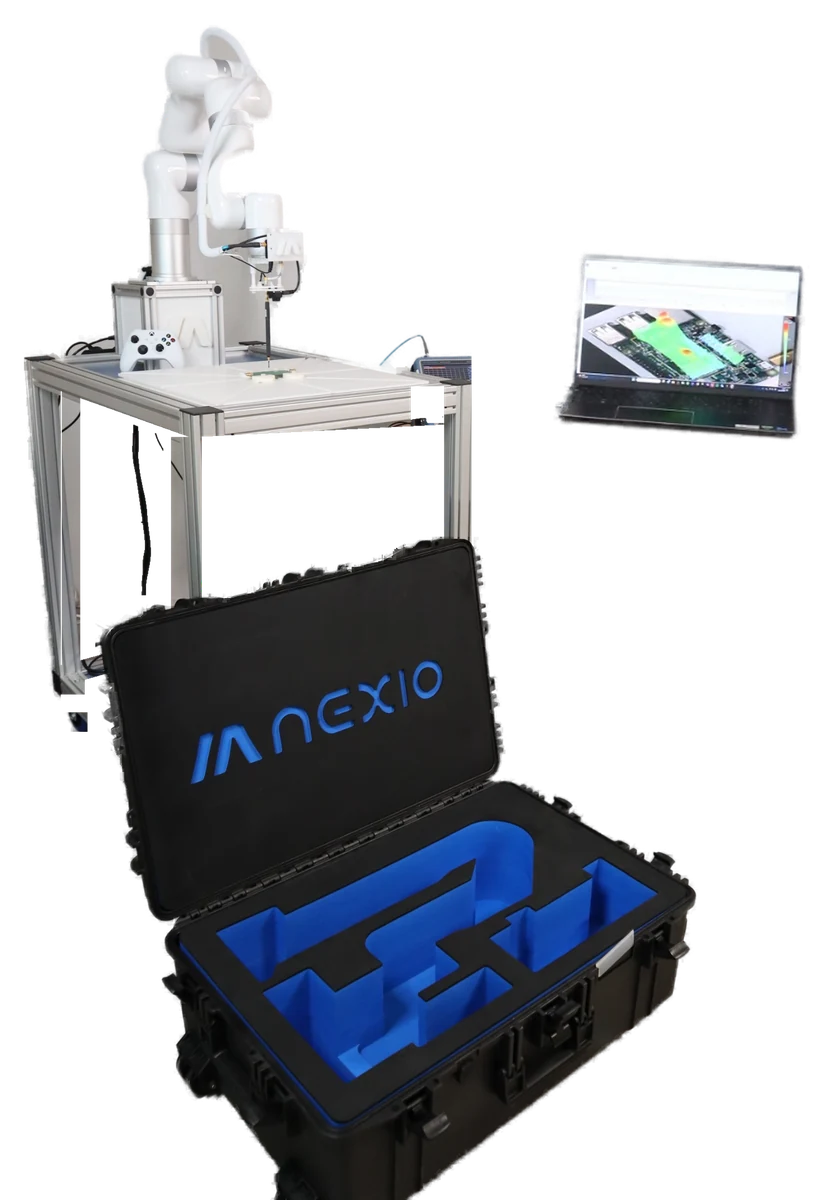
Nexio BAT-SCANNER robotic near-field scanner with its transport case and laptop

BAT-SCANNER

A 3D near-field scanning system with BAT-SCAN software for locating disturbance sources on electronic boards before qualification testing.

  • 0.1 mm repeatability and measurement accuracy
  • Scanning speed up to 1 m/s, integrated camera and probe protection
  • Compatible with many spectrum analysers, manual or joystick operation
DesignInvestigationManufacturingField returnsBAT-SCANNERone data set acrossthe product life

Use the same near-field data at every stage: locate sources during design, investigate failures, check production units and analyse field returns.

Standards and applications

Coverage across every sector you serve

BAT-EMC is used in accredited full-compliance and pre-compliance laboratories in automotive, commercial electronics, aeronautics, space and defence, medical and household appliances.

  • Drivers for Keysight, Rohde & Schwarz, AR, Anritsu, Tektronix, Schwarzbeck, Narda, Fluke, Prana and more
  • Support and maintenance from Nexio offices in France, Germany, China and India
  • Local demonstration, installation and training from ICX Lab
Ask about BAT-EMC

Seven sectors, 46 standards and specifications, 15 instrument categories. Search the full 2026 lists below.

AutomotiveIntegrated circuitsAerospaceMilitary and defenceCommercial and industrialElectrical testsRadio

Browse supported instruments and standards ↓

Compatibility

What BAT-EMC talks to, and what it tests to

The 2026 driver library and standards catalogue, as published by Nexio. Drivers ship with the software.

Not on the list? It is developed for you, free of charge. If the driver for your instrument or the standard you test to is not listed, Nexio develops the driver or configures the standard at no cost. Send us the model or the standard and we arrange it.

Supported instruments

81 manufacturers, 499+ model entries across 15 instrument categories.

AdvantestEMI receiversR3131, R3261/R3361, R4131, U3700, U43xx
AFJ InstrumentsEMI receiversFFT 3010, FFT 3100, FFT 3300
AlphaLabEMI receiversGM-2
AnritsuEMI receiversMS26xx, MS2711A, MS2720, MS28xx
FrankoniaEMI receiversCORE 6
Gauss InstrumentsEMI receiversTDEMI
Keysight (HP / Agilent)EMI receivers3589A, 4395A, E440xx, E4411, E4440, E5072, E7400 series, ESA L1500A, HP8542, HP8560E-Series, HP856xA, HP856xB/8590E-Series, HP859x EM-Series, N9048 PXE, N90xx MXE, N9320B/9340B, N99xx
MEBEMI receiversSMV
NardaEMI receiversER8000, PMM9010-9030
RigolEMI receiversDSA815
Rohde & SchwarzEMI receiversESCI, ESCS/ESHS/ESVS, ESH3, ESI/ESPI, ESL, ESMI/ESAI/ESBI, ESR, ESS, ESU, ESVD, ESVP, ESW, ESxS/ESxP, FPC, FPL, FPS, FS300, FSA, FSE/FSL, FSH, FSIQ, FSP, FSU, FSV, FSW
SchwarzbeckEMI receiversFCVU/FCKL
Signal HoundEMI receiversBB60C
TektronixEMI receivers27XX, MDO 4000, RSA306B

Supported standards

46 standards and specifications across seven sectors, through the emission, immunity, electrical-test and radio-test licences.

Automotive8 standardsVehicle and component EMC per ISO, CISPR, SAE and manufacturer requirements.
StandardScopeSupported parts and test cases
ISO 11452Component immunity to narrowband radiated energyParts 1 to 9 and 11: ALSE, TEM cell, BCI, stripline, parallel plate, direct RF injection, magnetic field, portable transmitters, reverberation chamber
ISO 11451Vehicle immunity to narrowband radiated energyParts 1 to 4: ALSE, on-board transmitter simulation, BCI
ISO 7637Electrical transients by conduction and couplingParts 2 and 3 (Electrical Test licence)
ISO 16750Environmental conditions for E/E equipmentPart 2 electrical loads
CISPR 12 / EN 55012Vehicles, boats and engines: radio disturbanceAll parts, radiated and conducted emission
CISPR 25Protection of on-board receiversAll parts, radiated and conducted emission
SAE J1113Vehicle component EMC proceduresPart 25 tri-plate line
Manufacturer standardsElectrical transient and supply-quality testsLV 124 (VW), FCA, Ford, General Motors, PSA, Renault
Integrated circuits3 standardsEmission and immunity measurement of integrated circuits, 150 kHz to 1 GHz.
StandardScopeSupported parts and test cases
IEC 62215Impulse immunity of integrated circuitsParts 1 to 3
IEC 62132Electromagnetic immunity of integrated circuitsParts 1 to 4: TEM cell, BCI, direct RF power injection
IEC 61967Electromagnetic emission of integrated circuitsParts 1 to 4: TEM cell, surface scan, 1 Ω / 150 Ω direct coupling
Aerospace1 standardsAirborne equipment per RTCA DO-160.
StandardScopeSupported parts and test cases
RTCA DO-160 to DO-160HAirborne equipment, all revisions up to DO-160HSections 18, 19, 20, 21 and 25: audio-frequency and induced-signal susceptibility, RF susceptibility, RF emission, ESD
Military and defence4 standardsMIL-STD, NATO, German and UK defence EMC standards.
StandardScopeSupported parts and test cases
MIL-STD-461 to 461HControl of EMI characteristics, all revisions up to MIL-STD-461HCE101, CE102, CE106, CS101, CS103, CS104, CS105, CS109, CS114, RE101, RE102, RE103, RS101, RS103, RS105
VG 95373German defence EMCParts 10, 12, 13, 14 and 15
AECTP 500 (NATO)Electromagnetic environmental effectsNCE01 to NCE05, NCS01 to NCS07, NRE01 to NRE03, NRS01, NRS02 (incl. reverberation chamber), NRS04
DEF STAN 59-411 Part 3UK MoD test methods and limitsDCE01/02, DCS01 to 03, DRE01 to 03, DRS01 to 03 (incl. reverberation alternative)
Commercial and industrial19 standardsGeneric, product-family and basic EMC standards.
StandardScopeSupported parts and test cases
CISPR 11 / EN 55011Industrial, scientific and medical equipmentAll parts, radiated and conducted emission
CISPR 14 / EN 55014Household appliances and electric toolsClicks, radiated and conducted emission, immunity
CISPR 16Measuring apparatus and methodsAll parts, emission and immunity
CISPR 32 / EN 55032Multimedia equipment emissionAll parts, radiated and conducted emission
CISPR 35 / EN 55035Multimedia equipment immunityRadiated and conducted immunity per IEC 61000-4-x
EN 55013Broadcast receiversConducted voltage, power disturbance and radiated emission
IEC 61000-4Testing and measurement techniques-2 ESD, -3 radiated RF, -4 EFT/burst, -5 surge, -6 conducted RF, -8 and -9 magnetic field, -11 dips, -12 ring wave, -18 damped oscillatory, -20 TEM/GTEM, -21 reverberation chamber
IEC 61000-6Generic standards-1 to -4: residential and industrial emission and immunity
IEC 60601-1-2Medical electrical equipmentAll tests, emission and immunity
IEC 61326-1Measurement, control and laboratory equipmentAll tests, emission and immunity
IEC 61851-21-2EV off-board chargersConducted, radiated and magnetic emission
IEC 60533Electrical installations in shipsRadiated and magnetic emission
EN 61800-3Adjustable-speed power drive systemsEmission, with IEC/TS 62578 below 150 kHz
EN 50121Railway applicationsAll parts, emission and immunity
EN 50498 / EN 15194Aftermarket vehicle electronics; power-assisted cyclesRadiated emission
ETSI EN 301 489Radio equipment and servicesAll parts, emission and immunity
FCC Part 15Radio frequency devices15.207, 15.209, 15.225, 15.231, 15.249
ANSI C63.4Radio-noise emission measurementConducted and radiated emission
DNVGL-CG-0339Marine electrical and electronic equipmentEMC A and EMC B locations
Electrical tests2 standardsTransient, dips and supply-quality tests with the Electrical Test licence.
StandardScopeSupported parts and test cases
IEC 61000-4Basic immunity standards-4 EFT/burst, -5 surge, -11 dips and interruptions, -12 ring wave, -16 conducted common mode 0 Hz to 150 kHz
AutomotiveInternational and manufacturer requirementsISO 16750, ISO 7637, LV 124, FCA, Ford, General Motors, PSA, Renault, Volkswagen
Radio9 standardsRadio spectrum tests with the Radio Test licence, with or without a companion radio tester.
StandardScopeSupported parts and test cases
ETSI EN 300 328Wideband transmission systems, 2.4 GHzTransmitter and receiver spurious emissions
ETSI EN 301 8935 GHz RLANTransmitter unwanted emissions in and outside the RLAN bands, receiver spurious
ETSI EN 303 6876 GHz RLANTransmitter and receiver spurious emissions
ETSI EN 300 220-2Short range devices, 25 MHz to 1 GHzTransmitter and receiver spurious emissions
ETSI EN 302 502Wireless access systems, 5.8 GHzTransmitter and receiver spurious emissions
FCC §15.407U-NII devices5 GHz U-NII-1/2A/2C/3, Wi-Fi 6E U-NII-5 to 8
FCC §15.247Frequency hopping and digitally modulated radiatorsWi-Fi, WLAN, Bluetooth, Zigbee
Companion devicesSignalling for WLAN and BluetoothR&S CMW270 / CMW500 (WLAN, Bluetooth), R&S CMX500 (WLAN)
ETSI emission test casesRadiated and conducted emissionTS 102 321, EN 300 422, EN 300 440, EN 303 345, EN 60945, EN 300 330, EN 303 328, EN 303 459, EN 300 454, EN 301 357
Request a driver or standard, free of charge Missing drivers and standards are developed free of charge. Lists per Nexio's 2026 edition, non-contractual.
Applications

From vehicle components to airborne equipment

The same software environment qualifies products against the sector standards each market demands, in the chamber you already run.

AutomotiveCommercial electronicsAeronauticsSpace and defenceMedicalHousehold appliances
Why through ICX Lab

Software, chamber and generators from one partner

Local demonstrationSee BAT-EMC driving your own instruments before you buy, on site or at our office in Penang.
Turn-key integrationBAT-EMC delivered together with Frankonia chambers and AMETEK CTS generators as one commissioned system.
Drivers on requestSend us the instrument model and its manual and the BAT-EMC driver is written for you, free of charge.
Training and first-line supportOperator training in your time zone, backed by Nexio's maintenance and driver updates.
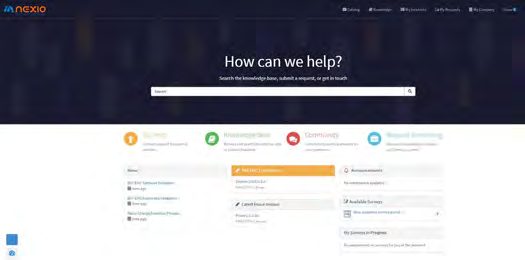
Nexio customer support portal
2 yearsof maintenance included with every licence: updates, new drivers and phone, email and remote support
500+instrument drivers, supplied free and extended on request
4 officesNexio support in France, Germany, China and India, with ICX Lab as your first contact

Product information and images are taken from the Nexio 2026 product catalogue. Pictures and technical sheets are non-contractual. BAT-EMC and the product names above are trademarks of Nexio. Visit nexiogroup.com for the manufacturer's site.

Tell us what you need to test

We reply within one working day with a quote or a plan.

Contact us